Energy Storage for Southeast Asia: Hot Climate, Unstable Grids, and a Buyer Verification Checklist
Home energy storage in Southeast Asia is a reliability-and-heat buy, not a green statement. Demand lands in Indonesia, the Philippines, Vietnam, and Thailand where storm-season blackouts and a year-ro
Energy Storage for Southeast Asia: Hot Climate, Unstable Grids, and a Buyer Verification Checklist
Home energy storage in Southeast Asia is a reliability-and-heat buy, not a green statement. Demand lands in Indonesia, the Philippines, Vietnam, and Thailand where storm-season blackouts and a year-round cooling load dominate; buyers should size to outage hours plus continuous AC, then verify a model-specific UN38.3 report, heat-rated cycle life, and a written after-sales plan. Read the segment view, an eight-point verification list, and a copy-paste inquiry checklist for importers.
Home energy storage in Southeast Asia is bought to ride out frequent blackouts and to carry the air-conditioning load through a hot, humid year, not as a green statement. Demand lands hardest in Indonesia, the Philippines, Vietnam, and Thailand, where the grid stutters through the storm season and the cooling bill owns the household budget. A buyer sizes to a full day of outages plus continuous AC, then verifies three things before paying: a UN38.3 report naming the exact model, cycle life rated for 40°C-plus, and a written after-sales plan that survives a monsoon service call. Judge the region by its outage hours and humidity, not by utility-scale headlines.
Why Southeast Asia storage is a reliability-and-heat buy
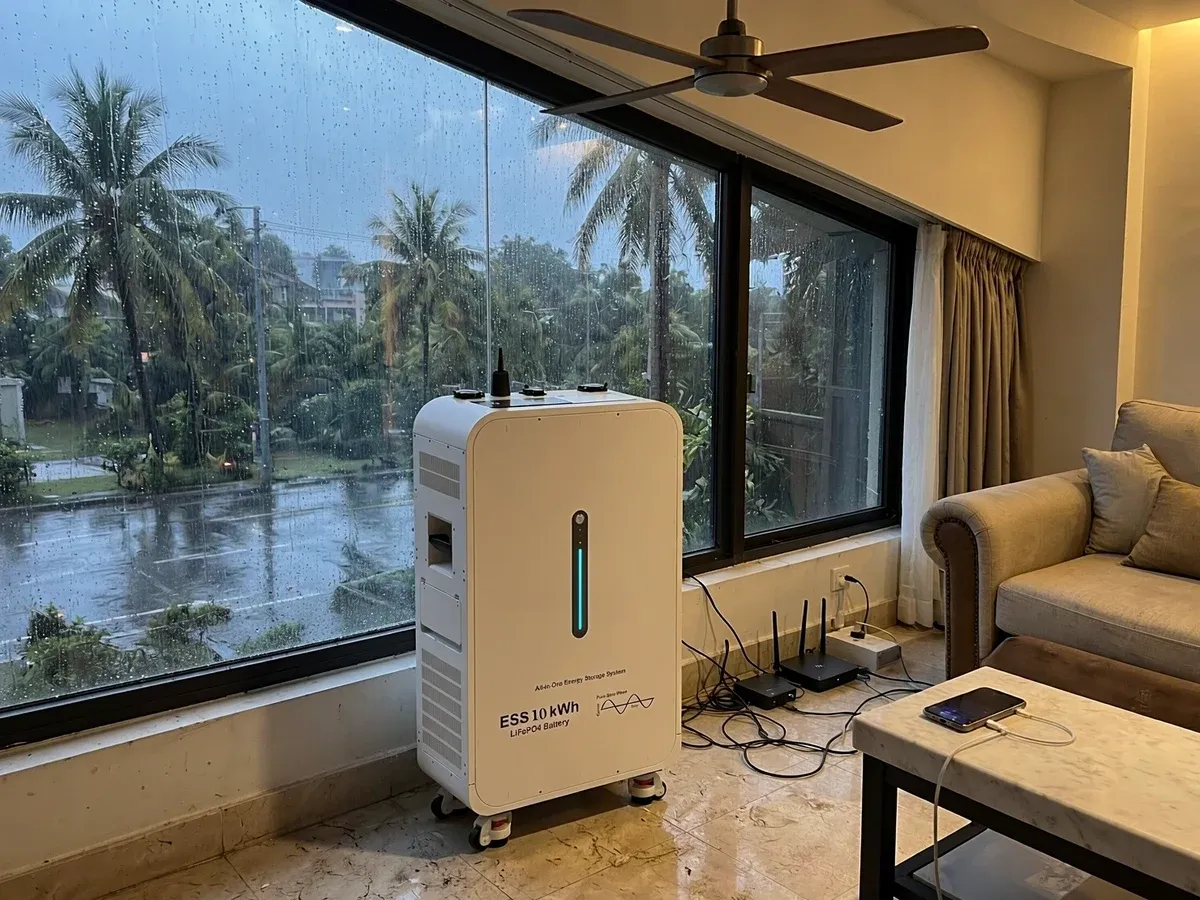
In cooler, steadier markets a home battery is sold as blackout insurance. That pitch undersells this region. Across Indonesia, the Philippines, Vietnam, and coastal Thailand the grid is dependable most days and fragile when it matters: typhoons, flood-season load spikes, and island micro-grids that brown out for hours. A battery here earns its keep by keeping the fridge, fans, router, and clinic freezer running through those hours. Heat is the second half: a tropical home pulls AC almost every night, so the unit is sized for a continuous load, not just stored kilowatt-hours. Our home energy storage page separates backup runtime from continuous-output sizing.
The demand drivers buyers actually feel
First, grid instability. Storm outages and underbuilt island lines turn a battery into the thing that keeps a shop open; where the utility restores power slowly, a 10kWh home unit covers essentials for a long evening.
Second, the cooling load. A split AC running all night is the largest draw in a tropical home and what the system must carry without tripping; buyers here read continuous output in watts, not just kilowatt-hours.
Third, rising electrification. Two-wheelers, chest freezers, and AC are spreading faster than the local line can handle, so homes and shops add storage to smooth the spike.
Fourth, policy tailwinds. Vietnam's directive to roll out rooftop-solar incentives by December 2026 lifts paired storage demand, because an array without a battery still goes dark at night. See energy storage solutions for how these forces combine; BESS tenders elsewhere say nothing about your outage hours.
Which households and businesses buy (a segment view)
Demand is not one blob; the list below is what most write-ups flatten.
- Urban home with frequent brownouts — buys 10kWh to cover fridge, fans, router, and lights through 4-6 hour outages; silent daily backup. Status: 已确认 (segment).
- Island or remote village — buys 16kWh-plus as primary source with rooftop solar; days of autonomy, fast install where the grid never reaches. Status: 已确认 (segment).
- Small shop, sari-sari store, or warung — buys 10kWh to keep lights, a chest freezer, and the POS running; lost stock from a warm fridge is the real cost. Status: 已确认 (segment).
- Villa or large home with whole-house AC — buys 16-20kWh for continuous cooling plus appliances; continuous kW, not just stored kWh. Status: 已确认 (segment).
- Telecom site or micro-grid pilot — buys cabinet banks per spec; volume depends on the operator's rollout. Status: 待内部确认 (confirm exact site list per inquiry).
The practical read: a supplier who only quotes 'capacity' misses the sale — the buyer is buying outage hours and cooling. Our 16kWh villa unit is built for the upper tiers, where continuous output and a heat rating decide the install.
Eight points to verify before you import
- Applicable boundary — storage fits unstable-grid or high-AC sites, an island with no line, or a shop that cannot afford a spoiled freezer; wrong buy for an always-on, cheap, flat-tariff apartment. Status: 已确认.
- Lead time — a unit or container from factory to your port runs weeks and lengthens at customs; request written lead time before promising a date. Status: 待内部确认 (request in writing).
- MOQ and tier logic — volume ships by container load, not single unit; confirm container MOQ and whether a mixed-SKU load is accepted. Status: 待内部确认.
- Sample flow — ask for one working sample unit before the container to bench-test switchover and runtime in your climate; fee and freight quoted per inquiry. Status: 待内部确认.
- Failure conditions — walk away if a supplier cannot show a UN38.3 report naming your exact model, has no local service plan, or cannot document heat-rated cycle life; a cheap unit that sweats through April is e-waste. Status: 已确认.
- Test methods — UN38.3 runs tests T.1 to T.8 under the UN Manual and IEC 62619 covers industrial cells; request both, read the model and lab name, ask for cycle-life data at 40-45°C. Status: 已确认 (method) / 待内部确认 (exact values).
- Parameter explanation — judge a unit by usable kWh, continuous kW, cycle life at local temperature, cell grade, and humidity IP rating, not the biggest sticker number; our technology page explains what each spec means in the field. Status: 已确认.
- Inspection and after-sales — require pre-shipment inspection and a written response time, with resolution terms in the approved contract, not chat promises. Status: 待内部确认 (response SLA per contract).
A staged sourcing checklist (the part most guides skip)
Most market articles end at 'demand is growing' and leave the importer exposed. Use this instead.
- At inquiry — send your daily AC and appliance load, typical outage hours, and hottest-month average temperature, then ask for the UN38.3 report and SDS for the exact model and batch you plan to buy.
- At order — confirm the container MOQ, the dangerous-goods declaration for your route, and the sea packing rules for a humid voyage.
- At pre-shipment — bench-test the sample for switchover and real runtime in tropical heat, and confirm the document model matches the purchase order character for character.
- At customs — keep the UN38.3, SDS, declaration, and packing list in one file with the commercial invoice.
A document naming a different model than the one in your container is worthless, however official the letterhead looks.
When storage is not the answer in Southeast Asia
Be straight with buyers who do not fit. If the grid is stable, cheap, and flat-tariff, a battery is a weak investment — say so. If the site has no solar and no generator, storage alone solves nothing; it only stores energy you must still produce. And if the buyer cannot service a LiFePO4 bank and no local plan exists, a cheap unit fails within two years. The home energy storage guide covers the duty-cycle questions the documents never answer.
Copy-paste inquiry checklist
- Send your daily load, your typical outage hours, and your hottest-month average temperature.
- Request the UN38.3 test report and SDS issued for your exact model and batch, not a catalogue generic.
- Ask for the container MOQ, written lead time, and whether a mixed-SKU load is accepted.
- Confirm pre-shipment inspection and a written after-sales response time in the contract.
- State your destination and ask which packing and declaration rules apply to your humid sea route.
Send those five points to our team and you get a quote and paperwork you can verify, not a reassurance you have to take on faith.
Frequently asked questions
Is energy storage in Southeast Asia only for off-grid homes? No. The largest volume is urban homes and shops that buy 10kWh to ride out brownouts and keep a freezer cold; off-grid islands and villages buy 16kWh-plus banks as the primary source, a smaller but steady tier.
Do I need rooftop solar for a home battery to pay back? A battery works without solar as backup and load-smoothing, but payback improves sharply once solar is on the roof, because stored self-generated energy beats grid top-up during an outage. Pairing the two is where most tropical systems find their economics.
What specification matters most in tropical heat and humidity? Not the headline capacity. Rated operating temperature, cycle life at 40°C-plus, and a humidity IP rating decide whether the unit holds charge through April and survives a monsoon service gap. Ask for test data at temperature; a brochure number measured at 25°C says nothing about July.
What documents must a supplier provide before I import? At minimum a model-specific UN38.3 test report and an SDS, plus a dangerous-goods declaration and packing certificate for your route. Ask for the lab name and issue date, and confirm the model matches your purchase order, because a reused generic certificate is a red flag at the port.
Talk to us before the container is booked
Southeast Asia rewards buyers who verify before they import. Size to your real outage hours and cooling load, request model-specific UN38.3 and SDS up front, and bench-test a sample in tropical heat. Tell our team your city, load profile, and target size, and we will line up the documents and the unit your market needs.