Aug 19, 2026C&I Energy Storage
How to Read a C&I Energy Storage Cabinet Specification Sheet
Learn how EPCs and distributors should compare C&I battery cabinet voltage, capacity, current, enclosure protection, thermal control, fire suppression, size and weight.
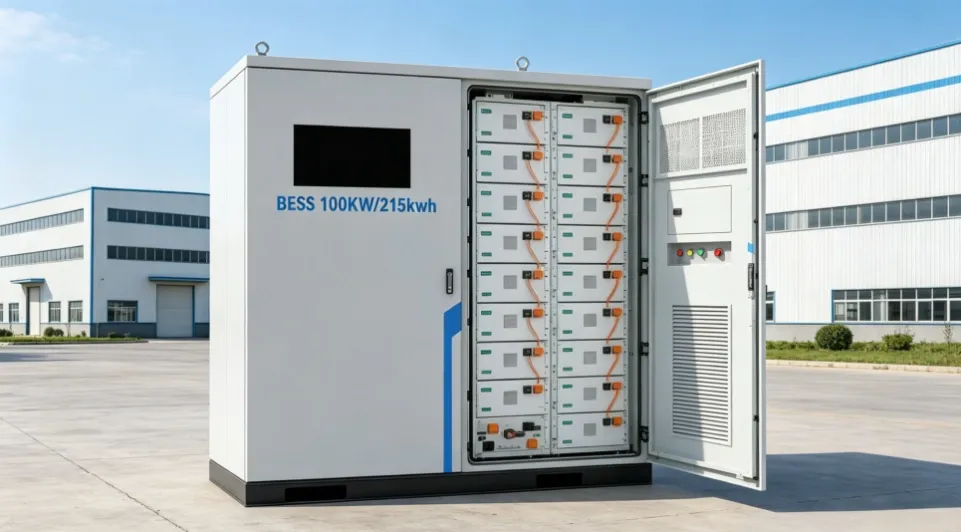
A commercial and industrial energy storage cabinet cannot be selected from the kilowatt-hour figure alone. The system voltage, operating range, current limit, thermal control, enclosure protection, fire-suppression method, footprint and weight all affect whether a cabinet can be integrated into a real project.
LinkPower's supplied Industrial & Commercial Storage Series table presents six cabinet configurations. This guide explains how an EPC, system integrator or distributor can read that type of specification sheet and identify the questions that still need project-level confirmation.
Start with the Model Matrix
The supplied catalog lists the following models:
- HN-D96KG01
- HN-D112KG01
- HN-D144KG01
- HN-D176KG01
- HN-D209KG01
- HN-D241KG01
Their rated system capacities range from 96.4608kWh to 241.152kWh. The table also shows a rated capacity of 314Ah across the six models, while rated battery system voltage rises with the system configuration.
This is why a buyer should always quote the complete model code. A general label such as "200kWh cabinet" is not enough to bind the voltage, dimensions, weight and thermal-control specification.
1. Rated System Capacity
Rated system capacity, expressed in kilowatt-hours, describes the nominal stored energy of the configured battery system.
In the catalog matrix, the six listed values are:
Model | Rated system capacity |
|---|---|
HN-D96KG01 | 96.4608kWh |
HN-D112KG01 | 112.5376kWh |
HN-D144KG01 | 144.6912kWh |
HN-D176KG01 | 176.6912kWh |
HN-D209KG01 | 208.9984kWh |
HN-D241KG01 | 241.152kWh |
Rated capacity does not by itself determine the usable project energy, backup duration or financial return. Those outcomes also depend on operating limits, depth of discharge, conversion equipment, control strategy, load profile and site conditions.
2. Rated Voltage and Operating Range
The matrix lists rated battery system voltages from 307.2Vdc to 768Vdc. It also lists a separate voltage operating range for each model.
These values matter because the battery system must be compatible with the selected power conversion system and the project's DC design. When reviewing a proposal, check that:
- The rated voltage matches the proposed system architecture.
- The full operating range is supported by the PCS.
- Protection and isolation devices are designed for the applicable DC voltage.
- Cables, connectors and service procedures match the system voltage.
- The quoted model and electrical diagram refer to the same configuration.
Do not approve a cabinet and choose the PCS as unrelated items.
3. Maximum Charge and Discharge Current
The catalog table lists 200A maximum charge/discharge current for the six models.
This field helps define the electrical operating envelope, but it should not be treated as a standalone system power promise. Ask how the current limit is applied across operating temperature, state of charge and protection conditions. The project engineer should reconcile it with the PCS rating and the battery control strategy.
4. Thermal Control
The table lists air-conditioning power of 330W for the two smaller configurations and 1240W for the four larger configurations.
For project review, request more than the air-conditioner wattage:
- Operating and storage temperature range
- Temperature sensor layout
- Heating or low-temperature strategy, if applicable
- Alarm thresholds
- Maintenance access and filter schedule
- Auxiliary-power requirements
The supplied matrix supports an air-conditioned cabinet description. It does not support replacing that description with an unsupported liquid-cooling claim.
5. Enclosure Protection
The listed cabinets carry an IP65 enclosure rating in the supplied table. IP ratings should be read as a defined enclosure protection classification, not as proof that a cabinet can be installed in any environment without a site review.
The project still needs to consider drainage, flooding risk, direct sunlight, ventilation, ambient temperature, corrosion exposure, foundation design and local code requirements.
The catalog also describes lightning and rain protection, corrosion and rust prevention, intelligent monitoring, rugged construction, customization and parallel operation. These items should be confirmed in the project specification and drawings for the exact configuration.
6. Fire-Suppression Method
The six model columns list thermal aerosol fire suppression.
For procurement, bind the fire-suppression description to the exact cabinet design. Request the applicable system description, detection logic, placement, alarm interface, maintenance instructions and the documents required by the destination market or authority having jurisdiction.
Avoid publishing a general statement that the system "protects every project" or eliminates all fire risk. A component description is not the same as a project-level safety guarantee.
7. Dimensions and Weight
The catalog lists cabinet weights from 660kg to 1655kg, with dimensions that vary by model. These figures directly affect transportation, lifting, foundation design, service clearance and site layout.
Before ordering, confirm:
- Net and packed weight
- Lift points and handling instructions
- Cabinet footprint and door-opening clearance
- Foundation or plinth requirements
- Cable-entry direction
- Maintenance access
- Packing dimensions and container loading plan
The largest energy configuration is not automatically the easiest project fit. Site access and installation constraints can be decisive.
8. Information the Cabinet Table Does Not Replace
A model matrix is a starting point. A complete project package may also require the PCS selection, single-line diagram, EMS/BMS communication details, grid and load interface, protection coordination, auxiliary loads, commissioning plan, warranty terms and the documentation applicable to the target market.
If a value is missing, request it. Do not copy a figure from another model or from an unrelated project.
EPC and Distributor Review Checklist
- Bind every document to the exact model code.
- Match battery voltage range to the PCS.
- Reconcile current limits with the control strategy.
- Confirm thermal-control and auxiliary-power requirements.
- Review IP rating against the real installation environment.
- Confirm fire-suppression design and required project documents.
- Validate cabinet dimensions, weight, lifting and foundation needs.
- Request a current single-line diagram and communication interface list.
- Record unresolved project-specific fields before commercial approval.
For the business case behind adding C&I systems to a distribution portfolio, read Why Solar Distributors Should Enter the C&I Energy Storage Market, while treating ROI as project-specific rather than guaranteed.
Request Project Configuration Support
Provide LinkPower with the load profile, grid conditions, target capacity, PCS concept, installation environment, available footprint and destination-market requirements. The final configuration should be confirmed against the current approved project documents.