Aug 25, 2026Residential ESS
Can a 16kWh Home Battery Run an Air Conditioner During an Outage?
Can a 16kWh home battery run an air conditioner during an outage? Check running load, compressor startup demand, inverter output, backup circuits and realistic runtime.
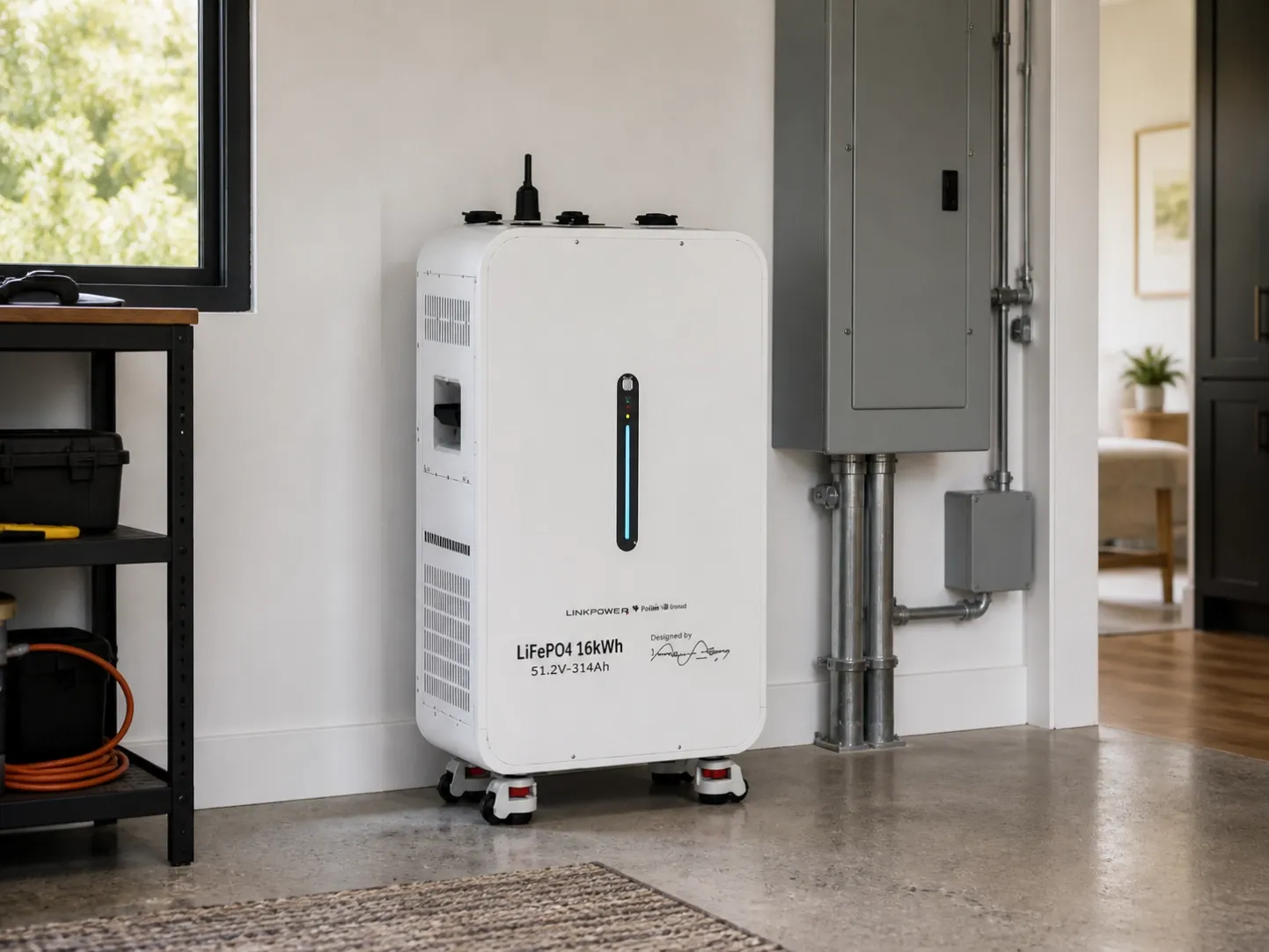
The question usually arrives when the weather is already hot and the grid has started to feel unreliable: can a 16kWh home battery keep an air conditioner running through an outage? The honest answer is “possibly”—but battery capacity is only one part of the decision. The air conditioner, inverter, backup-circuit design and other household loads must all fit together.
Short answer: capacity alone does not answer the question
A 16kWh battery describes stored energy, not the maximum power that can be delivered at one moment. Cooling can fail even when plenty of energy remains if the inverter cannot support the compressor start, the air conditioner is not connected to the backup panel, or other loads push the system above its limit. Final suitability therefore depends on the current model datasheet and measured site loads.
The four numbers that decide whether cooling stays on
- Air-conditioner running demand
Ask the HVAC installer for measured running power under realistic weather conditions. The label value is useful, but actual draw can change with compressor type, thermostat setting, outdoor temperature and maintenance condition. A variable-speed unit may behave very differently from an older fixed-speed compressor.
- Compressor startup demand
Many air conditioners draw a short burst of power when the compressor starts. That surge may be several times the normal running demand. Do not assume a battery can start the unit because its energy capacity looks large; compare the HVAC startup requirement with the inverter surge rating and permitted duration.
- Inverter continuous and surge output
The inverter must support the air conditioner and every other backed-up appliance at the same time. Request the current continuous-output and surge-output data for the exact system offered. Do not copy ratings from a different capacity or an older brochure.
- Usable energy after other backup loads
The full 16kWh nameplate figure should not be treated as guaranteed usable energy. Reserve settings, battery-management limits, temperature, conversion losses and system configuration all affect what reaches the loads. Refrigeration, lighting, routers, pumps and medical equipment also share the available energy.
A practical way to estimate runtime
Start with this planning formula:
Estimated hours = confirmed usable battery energy (kWh) ÷ average combined backup load (kW)
For example, if an installer confirms 13kWh is available for the planned operating window and the measured combined load averages 1.8kW, the simple calculation is about 7.2 hours. Real operation will vary, so keep a reserve and test with the actual system. This is an illustration, not a LinkPower product guarantee.
Should the whole house be backed up?
For many homes, a selected-load panel is the cleaner answer. It can prioritize one efficient air conditioner, the refrigerator, basic lighting, internet equipment and a few outlets while excluding electric ovens, large water heaters, pool pumps and other heavy loads. This reduces surprise shutdowns and makes the required inverter power easier to define.
Buyer checklist before requesting a 16kWh quote
• Air-conditioner model, phase, voltage and rated running current
• Startup or locked-rotor current, if available, or installer measurement
• List of every circuit that must remain live during an outage
• Desired backup duration in hot-weather and overnight conditions
• Existing solar array, inverter and transfer-switch details
• Installation location, ambient-temperature range and ventilation conditions
• Destination market, local electrical rules and project timeline
When a 16kWh system is a sensible starting point
A 16kWh system is worth evaluating when cooling is a priority, the buyer is willing to separate essential loads, and the goal is to bridge a defined outage window rather than promise unlimited whole-home operation. It is also a practical discussion point when measured loads show that 5kWh or 10kWh would leave too little runtime margin. The final choice must still be checked against the exact inverter and battery configuration.
What to send LinkPower for a useful recommendation
Send the HVAC nameplate or measurement, the essential-load list, desired backup hours, site voltage, destination market and installation conditions. LinkPower can then review the project against the current 16kWh model documents instead of guessing from the capacity label alone.
Review the LinkPower 16kWh home battery:
https://www.linkpoweress.com/products/16kwh-villa-home-battery