Aug 19, 2026Residential ESS
1kWh vs 2kWh vs 4kWh Portable Power Stations: A Distributor's Capacity Guide
Compare LinkPower 1kWh, 2kWh and 4kWh LiFePO4 portable power stations by capacity, inverter output, ports, size and weight for distributor planning.
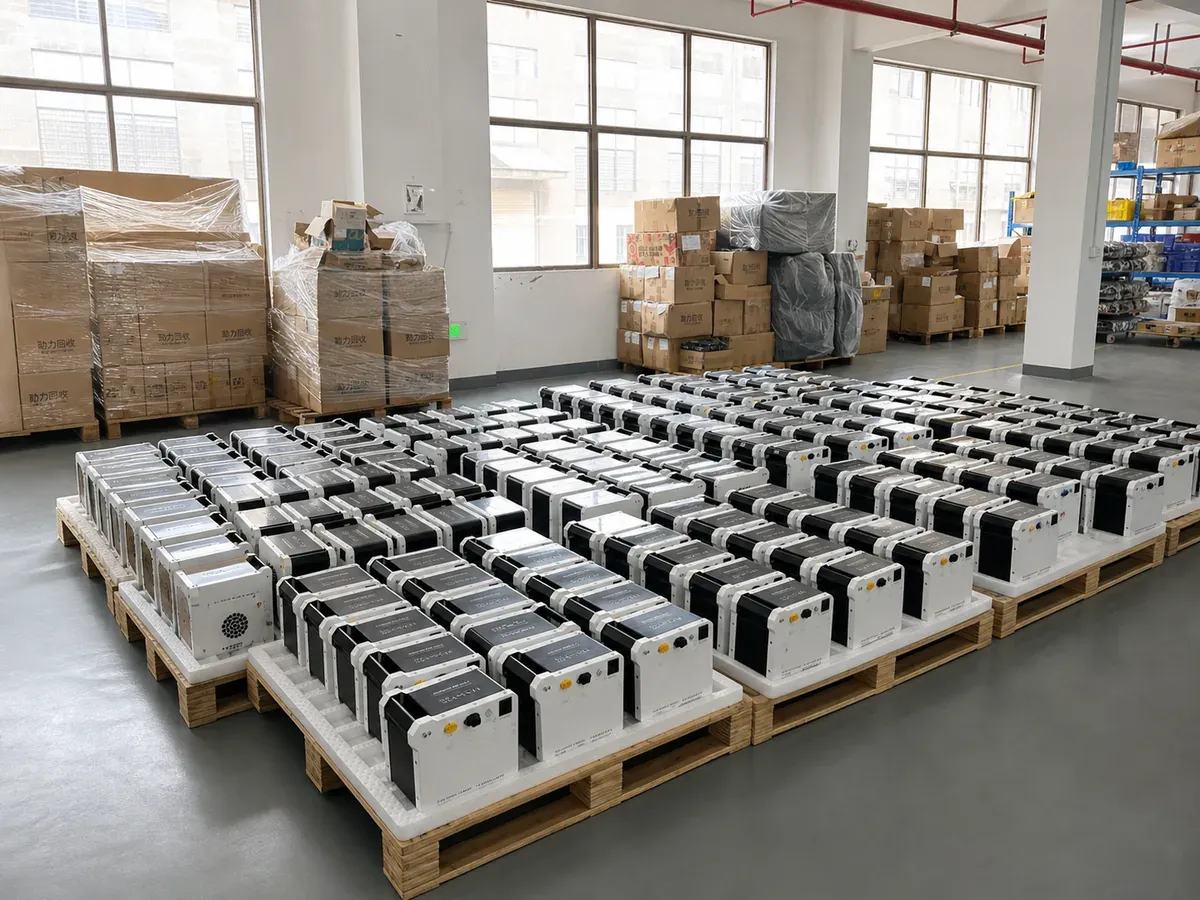
Portable power station buyers often start with a capacity number, but capacity alone does not tell the full story. A distributor also needs to compare continuous inverter output, available ports, charging input, product size, weight and the loads the customer expects to connect.
LinkPower's supplied catalog presents three LiFePO4 portable power station models with approximately 1kWh, 2kWh and 4kWh of stored energy. The comparison below explains the differences without estimating backup time, because actual runtime depends on the connected load and operating conditions.
Quick Comparison: 1kWh, 2kWh and 4kWh
Model | Stored energy | Continuous inverter output | Output ports | Dimensions | Weight |
|---|---|---|---|---|---|
ESS-500W-1000Wh | 1004.8Wh | 500W pure sine wave | AC, 12V DC, USB-A, USB-C PD | 304 × 180 × 245mm | 12kg |
ESS-1000W-2000Wh | 2009.6Wh | 1000W | AC ×2, DC ×4, USB ×3 | 304 × 240 × 304mm | 22kg |
ESS-1800W-4000Wh | 4019.2Wh | 1800W | AC ×2, DC ×4, USB ×3 | 336 × 239 × 355mm | 32kg |
All three models use LiFePO4 battery chemistry. The catalog lists more than 6,000 cycles for the range, with the 1kWh model specifying the cycle figure at greater than 80% depth of discharge.
What Stored Energy Tells You
Stored energy, measured in watt-hours, describes how much electrical energy a battery can hold. Moving from approximately 1kWh to 2kWh doubles the nominal stored energy in this comparison, while the 4kWh model provides roughly four times the nominal stored energy of the 1kWh model.
That does not mean every appliance will run exactly two or four times longer. Real use is affected by the appliance load, inverter efficiency, operating temperature, battery management settings and the number of devices running at the same time.
For distributors, the practical lesson is simple: do not sell only from the capacity label. Ask for the customer's expected load list and required operating duration first.
Why Inverter Output Matters
The inverter rating limits how much AC power the system is designed to provide continuously.
- The ESS-500W-1000Wh model lists a 500W pure sine wave inverter.
- The ESS-1000W-2000Wh model lists 1000W continuous inverter output.
- The ESS-1800W-4000Wh model lists 1800W continuous inverter output.
A product can have enough stored energy for a task but still be unsuitable if the connected AC load exceeds the inverter's continuous output. Wholesale buyers should request the intended appliance list and check starting or surge requirements separately when those values are not shown in the supplied specification.
Compare Ports Before Comparing Price
The port layout determines how the power station can connect to real equipment.
The 1kWh model includes AC, 12V DC, USB-A and USB-C PD outputs. The 2kWh and 4kWh models list two AC outputs, four DC outputs and three USB outputs.
Before placing a bulk order, confirm:
- The number and type of AC sockets for the destination market.
- The voltage and connector standard for DC loads.
- Whether customers require USB-C PD or standard USB outputs.
- Whether several outputs can be used together within the inverter and system limits.
- The plug type, labeling and manual language required for the target market.
Size and Weight Affect the Sales Channel
The 1kWh model is the lightest at 12kg. The 2kWh model is listed at 22kg, and the 4kWh model at 32kg.
These differences affect packaging, warehousing, demonstrations and how customers move the product. A 12kg unit may suit a sales channel that values compact transport. Higher-capacity models may be better positioned where stored energy and higher continuous output matter more than minimum weight.
The right choice depends on the channel and use case rather than a universal "best" capacity.
Solar Charging Information to Verify
The catalog lists an 11-55V solar input range with up to 300W for the 1kWh model and an 11-55V input range with up to 550W for the 2kWh model.
For the 4kWh model, distributors should confirm the final project-specific charging specification directly from the current approved datasheet before publishing or quoting a PV input value.
Which Capacity Fits Which Buyer Conversation?
Start with the 1kWh model when:
- Lower weight and a compact footprint are important.
- The expected continuous AC load fits within 500W.
- USB-C PD and common portable-device connections are relevant.
Consider the 2kWh model when:
- The buyer needs more stored energy than the 1kWh unit.
- A 1000W continuous inverter better matches the intended equipment.
- Additional AC and DC output ports are useful.
Consider the 4kWh model when:
- The buyer needs the highest stored energy of the three models.
- The planned AC loads fit within 1800W continuous output.
- A 32kg product remains practical for the intended use and distribution channel.
These are comparison points, not runtime or application guarantees. Final selection should be based on a documented load list and the approved product specification.
Distributor Checklist Before Ordering
- Confirm the exact model code and stored energy.
- Match continuous inverter output to the intended loads.
- Check port quantities, plug types and market-specific voltage requirements.
- Review dimensions, unit weight, carton data and pallet quantities.
- Confirm the current charging input specification for the exact model.
- Request the applicable compliance and transport documents for the destination market.
- Validate a sample before committing to a full commercial order.
For a residential battery comparison, read How to Choose Between 5kWh, 10kWh and 16kWh Home Energy Storage Systems.
Request Model Matching Support
Send LinkPower the target loads, required operating time, destination market, plug standard and expected order quantity. The team can then match the request to an appropriate model and provide the current project-specific specification.