Sep 4, 2026Residential ESS
Can You Add a Home Battery to an Existing Solar System?
A retrofit checklist for adding a home battery to existing solar, covering inverter compatibility, AC or DC coupling, backup goals, controls and approvals.
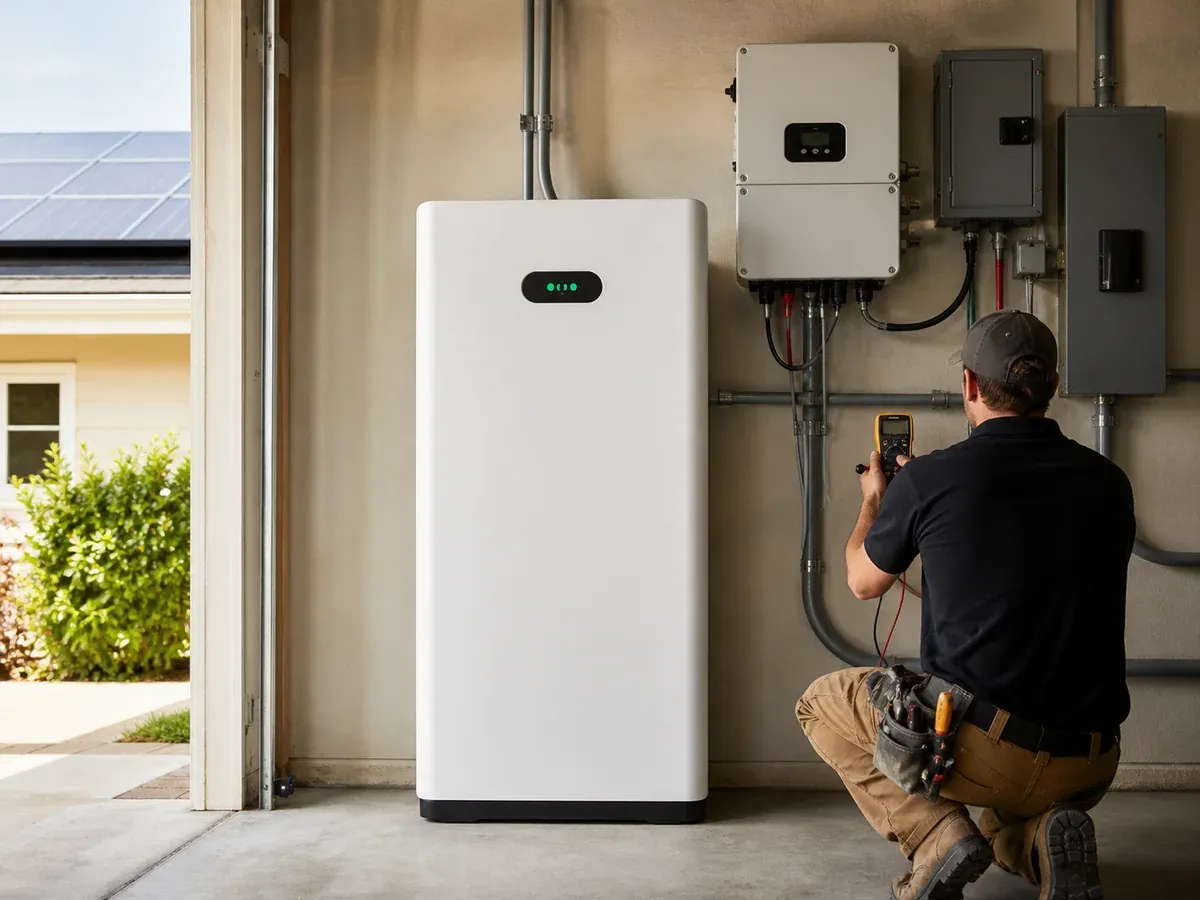
Yes, a home battery can often be added to an existing solar system. “Often” is doing important work in that sentence.
A retrofit is not simply a matter of placing a battery beside the inverter and hoping the two devices become friends. Compatibility, control method, backup design, approvals and the condition of the existing installation all need checking.
First question: what should the battery do?
Different goals lead to different designs:
• Store daytime solar for evening use
• Support selected loads during a grid outage
• Reduce grid use during certain tariff periods
• Increase self-consumption
• Prepare the home for future load growth
Backup is the detail that changes many quotations. A grid-connected solar system may shut down during an outage for safety. Adding a battery does not automatically make every solar panel and household circuit operate when the grid fails.
AC-coupled or DC-coupled?
In broad terms, an AC-coupled retrofit adds battery equipment on the AC side and may allow more of the existing solar system to remain in place. A DC-coupled design may integrate solar and storage more directly but can require changes to existing inverter equipment.
Neither approach is universally better. The correct choice depends on existing hardware, conversion path, backup requirements, communications, available space, local rules and future plans.
The compatibility checklist
Ask the installer to record:
- Solar-panel model and array configuration
- Existing inverter brand, model, age and firmware
- Grid connection arrangement
- Distribution-board layout
- Metering and export-control equipment
- Available installation space
- Required backed-up circuits
- Local voltage and grid requirements
- Internet or communications needs
- Future solar, battery or EV plans
Do not assume that matching voltage numbers guarantee a working system. Communication protocols, control logic, protection and certification requirements matter too.
Check the old system before adding new equipment
A retrofit is a good time to inspect cable condition, labeling, protective devices, earthing arrangements and the condition of the existing inverter. New equipment cannot repair an old design problem by standing next to it.
Questions buyers should ask
Will solar continue charging the battery during an outage? Which circuits will receive backup power? What happens when the battery is full? Can export limits still be controlled? Who supports the complete system if two equipment brands are involved?
Get these answers in writing for the exact proposed configuration.
What to send with the inquiry
Send clear photos of the inverter label, distribution board, electricity meter, proposed battery location and solar array. Include recent electricity bills where appropriate, the backup-load list, local voltage and destination market. Do not send passwords or private account credentials.
Review the LinkPower 16kWh premium home energy storage system:
https://www.linkpoweress.com/products/16kwh-premium-energy-storage-for-villas