Sep 4, 2026Residential ESS
Home Batteries in Cold Weather: What Should Buyers Check?
Plan a residential battery for cold weather by checking installation temperature, charging limits, enclosure, heating strategy, monitoring and winter loads.
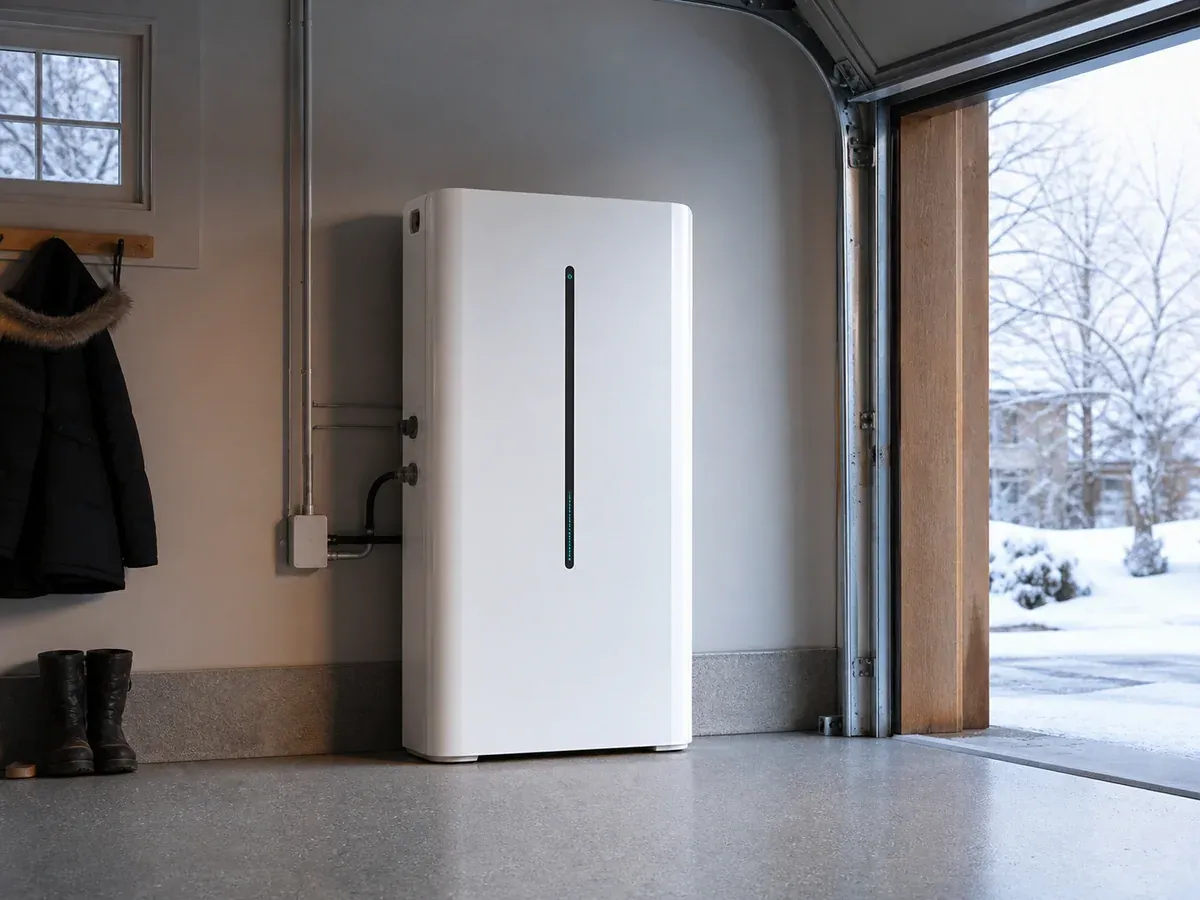
Cold weather does not make a home battery useless. It does make vague answers less useful.
Temperature can affect available energy, charging behavior and system protection. The correct winter plan depends on the exact battery chemistry, product design, installation location and manufacturer instructions. “It gets cold here” is not enough information; northern Spain and northern Finland are having very different conversations.
Record the real temperature
Use the temperature at the proposed battery location, not the average temperature shown on a travel website. A garage, outdoor wall and heated utility room may experience very different minimums.
Ask for:
• Lowest overnight temperature at the installation point
• Typical winter temperature range
• Duration of cold periods
• Whether the space is heated or insulated
• Exposure to wind, snow, moisture and direct sun
• Summer maximum temperature at the same location
The battery has to live through the entire year, not just the season in the sales photo.
Charging deserves special attention
Some battery systems limit or stop charging at low cell temperatures to protect the battery. The exact behavior must come from the current documentation for the proposed model.
Ask whether the system has temperature monitoring or a heating strategy, how that feature is controlled, what energy it uses and how it affects recharge planning. Never add an improvised heater near a battery.
Winter loads may be higher
The battery may face colder conditions just when the household wants more energy. Heating equipment, pumps, circulation systems, lighting and longer indoor hours can change the load profile.
Electric space heating can dominate a residential backup plan. Check its running demand and decide whether it belongs on the backup circuit. Warm socks are not an engineering control, but they do consume less electricity.
A winter-ready checklist
- Confirm the product's permitted operating and charging temperatures.
- Compare those limits with measured site conditions.
- Verify enclosure and moisture protection for the exact location.
- Check whether snow, ice or stored items can block clearances.
- Confirm cold-start, charging and protection behavior.
- Review winter essential loads and simultaneous demand.
- Plan monitoring and alerts.
- Keep service access available after snowfall or storage changes.
- Confirm local installation rules with a qualified installer.
Monitoring is useful, not magical
Remote monitoring can show temperature, alarms and operating status, but it cannot fix a poor location. Decide who receives alerts, who interprets them and what action is expected.
What to send with an inquiry
Provide the minimum and maximum temperatures at the intended location, photographs of the site, installation type, local voltage, essential-load list, outage pattern and destination market. Ask for the latest product manual and cold-weather operating information.
Review the LinkPower 16kWh premium home energy storage system:
https://www.linkpoweress.com/products/16kwh-premium-energy-storage-for-villas
Discuss a cold-climate residential storage project with LinkPower:
https://www.linkpoweress.com/contact-us