Aug 27, 2026Residential ESS
Where Should a Home Battery Be Installed: Garage, Utility Room or Outdoors?
Compare garage, utility-room and outdoor home battery locations by access, temperature, moisture, clearance, cable routing and local installation rules.
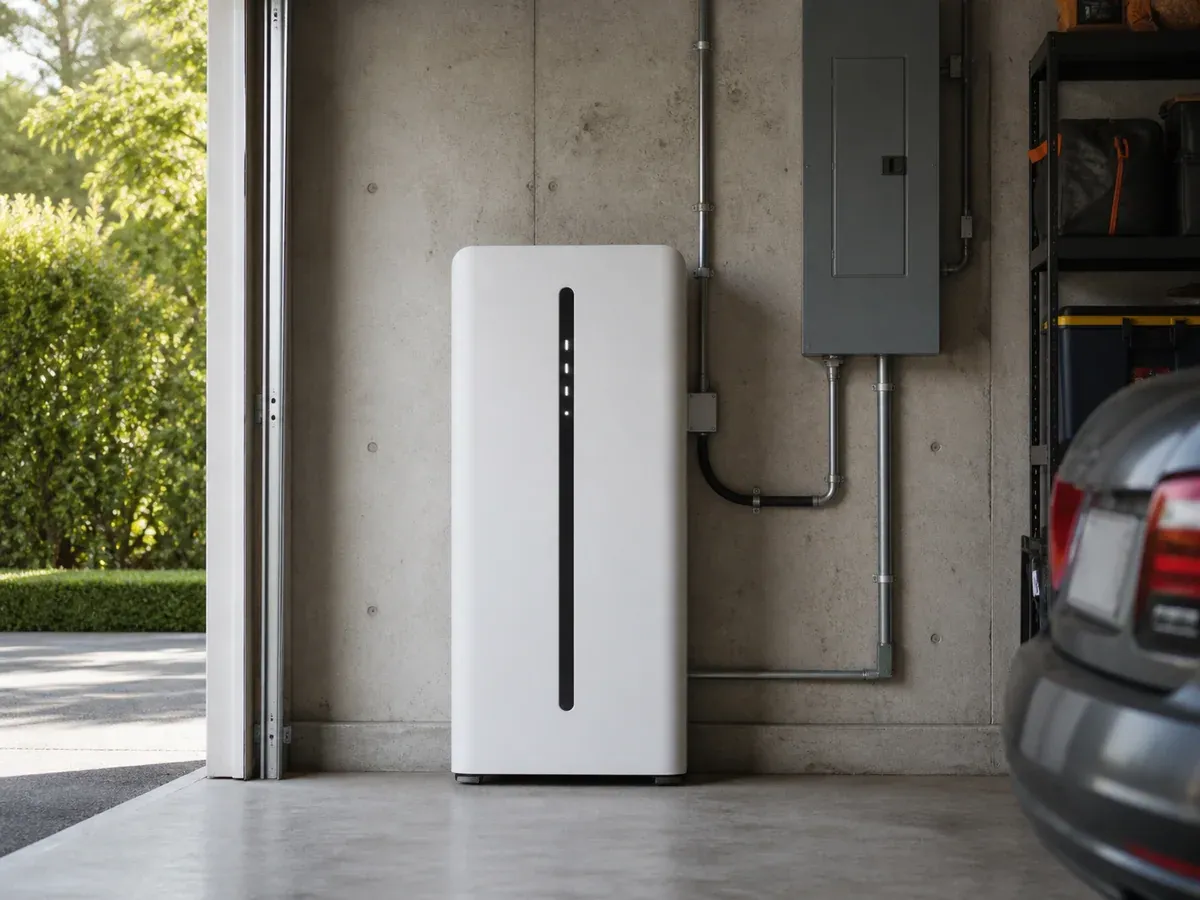
The best place for a home battery is rarely the place that looked empty for five minutes during the sales visit.
A garage, utility room or protected outdoor area may all be possible. The right answer depends on the exact product instructions, local electrical and fire requirements, climate, cable route and how people actually use the space. A battery should not become a new coat rack, parking target or garden ornament.
Start with the non-negotiables
Before discussing appearance, confirm the latest installation manual for the exact model. Check permitted temperature range, enclosure rating, ventilation, mounting method, clearances, service access and any restrictions involving doors, windows, ignition sources or escape routes.
Local codes and the authority having jurisdiction decide what is acceptable. A photograph on the internet does not grant planning permission.
Garage: convenient, but not automatically correct
A garage can offer short cable routes, shelter and easy service access. It can also bring vehicle impact risk, dust, stored chemicals and large temperature swings.
Ask these questions:
• Can a parked vehicle reach the battery?
• Will tools, bicycles or boxes block the required clearance?
• Is the wall or floor suitable for the mounting method?
• Does summer heat or winter cold exceed the product limits?
• Can an installer reach the unit without moving half the household?
Where impact is possible, the installer may need an approved protective solution. Do not invent one during the quotation; confirm the local requirement.
Utility room: tidy cable routes, crowded reality
A utility room may keep the system close to electrical equipment and away from vehicles. The problem is usually space. Water pipes, boilers, dryers and storage shelves can turn a neat drawing into a very busy wall.
Check moisture sources, heat-producing equipment, drainage, ventilation and access. A battery and a leaking pipe should never be introduced as roommates.
Outdoors: weather protection is more than a roof
Outdoor installation requires confirmation that the exact product and mounting arrangement are approved for the environment. Consider rain, direct sun, salt air, flooding, snow, insects, dust and accidental impact. A shaded wall may be cool in the morning and an oven at 4 p.m.
Do a short site-location comparison
For each candidate position, record:
- Distance to the distribution board and solar equipment
- Cable route and penetration points
- Temperature and weather exposure
- Required working clearance
- Vehicle, child and pet access
- Water, dust and chemical exposure
- Internet or communications availability if required
- Future expansion space
Then let the qualified installer compare those facts with the current manual and local rules.
What to send with an inquiry
Send wide and close photographs of the proposed area, wall or floor material, nearby electrical equipment, approximate cable route, local climate, destination market and whether the system will connect to existing solar.
Review the LinkPower 5kWh residential battery backup system:
https://www.linkpoweress.com/products/5kwh-residential-battery-backup-system
For a location-specific discussion, send LinkPower the site photographs and project details:
https://www.linkpoweress.com/contact-us